Here is the Link to the article.
https://hyperallergic.com/444922/learning-to-be-a-painter-at-64/
Here is the original article in it’s entirety.
PRINCETON, NJ — After retiring as a professor of American history from Princeton University, Nell Painter embarked on a new chapter of her life: to become a practicing artist. Her Ph.D. from Harvard wouldn’t be enough to get her into a good MFA program, so at the age of 64, the author of four books including the New York Times bestseller The History of White People, enrolled as an undergraduate at Mason Gross School of the Arts at Rutgers. And while others her age may have been satisfied with taking painting classes through the local community college or continuing ed program (or even at the senior center) Painter applied the earnestness that had driven her through her scholarly career all the way through completion of a BFA at Mason Gross and then an M.F.A. at the Rhode Island School of Design. No little old lady painting flowers in vases is she.
Old in Art School to be published by Counterpoint Press in June 2018, is the memoir that chronicles Painter’s journey toward achieving what her name suggests.
 Nell Painter, “Twentieth Century Drawing” (2008) ink & graphite
The book is beautifully written, fun and funny, describing how, after a life of overcoming unfair treatment as a black woman, she is now fighting the discrimination of being OLD, black, and female. The book is filled with anecdotes like one about waiting at for a train in New Brunswick and being approached by an 18-year-old art student in a little skirt who asks “Just how old are you?”
And then there’s the one professor who’s determined to teach her that she will never be an artist. “You may show your work. You may have a gallery. You may sell your work. You may have collectors,” he tells her, but adds that she lacks the “essential component, the ineffable inner quality necessary to truly be An Artist.”
Full disclosure: I have a running fantasy of starting over and going to art school — and I’m 64. Reading Painter’s account reminds me of something an art professor once warned: going to art school may very well kill the artist in you!
Painter struggles to keep her creative juices flowing. “That contented concentration is what I love about making art,” she writes.
I don’t call it fun. My non-artist friends would invariably ask … was I having fun? True, art can feel like play, can actually be play. But I’d say fun is too frivolous (a) word for the contentment, the concentration, the peace of mind I experience when I draw or paint …
Old in Art School appeals not just to those who dream about becoming late-in-life artists, but anyone who grapples with how to direct their energies post-retirement. In this sense, being an “artist” is more about designing your life, defying the kind of giving up that retiring sometimes implies. Being retired doesn’t mean being retiring, but rather is a turning point, a chance to pursue a new direction not yet explored.
 Nell Painter, “Back Man 1” (2011) acrylic, oil stick, and collage on canvas
Painter’s artwork has been exhibited at the San Angelo Museum of Fine Art, Smith College Museum of Art, Brooklyn Historical Society, Gallery Aferro in Newark, New Jersey, and SUNY Genesco, but perhaps her greatest work of art is this memoir, providing an inside look at the hurdles to becoming an artist at any age.
There are interesting anecdotes about those who inspire her: Faith Ringgold, Alice Neel, Romare Bearden, Betty Saar, Maira Kalman, and Sonia Delauney, among them. At times, in her generous attempt to share her art education, she becomes a bit didactic, but this is inevitable given how studious she is. It’s not enough to go to art school; she also spends weekends in intensive classes at the New York Academy of Art.
When one of her professors speaks of her own Yale assignment to complete 100 drawings, Painter’s fellow students groan as she imposes the challenge on herself — and mind you, this was taken up while writing “The History of White People,” chairing various scholarly organizations and flying back and forth to the West Coast to care for elderly parents. She incorporates her feelings about her dying parents in her work, only to have a teacher call it “dreary.”
Even when she makes the final visit to see her mother before she dies, Painter brings chapters of her book to review, and while she had aspirations to draw her mother dying, in the end she cannot, fearing the artmaking would separate her from the experience.
 Nell Painter, “Self-Portrait 10” (2010) acrylic & collage
Indeed art school does seem to be killing the artist in her — especially when fellow students don’t share her interest in the black aesthetic, black artists and her defense of the role of women in art. “The lack of concern for what I was groping toward, for what I was trying to do, deflated me.” When other students get disheartened they want to go home, but Painter can’t go home (her saintly husband holds down the fort in Newark) — this is what she’s here to do.
She shines a light on some of the ways old people, with partners and professions, don’t fit in, such as at residential art programs like Skowhegan, which she writes is rife with:
exuberant young people creating art intensively, expressively in gigantic gestures and series of all-night wonders of solitary and cooperative imagination … tattooed art kids bounding around in shorts and flipflops … annoyed by misunderstood rules, propelled by hormonal surges, drinking and drugging and fucking in the bushes, throwing up in their studios.
She finds herself surrounded by Korean students whose parents sent them to RISD based on its US News & World Report ranking. While Painter set out to make art school the icing on the cake of her life, in the end she describes grad school as an exercise in humiliation. A self-described fuddy duddy, her young classmates do help her to loosen up.
 Nell Painter, “Nature of Life April” (2010) acrylic on canvas panel
Painter dwells a bit much on being self-conscious about becoming an artist, about how to dress as an artist and achieve the look of an artist — it’s almost as if her agent instructed her to add those details to seem more human. It’s hard to picture this stalwart woman succumbing to straightening her hair. When you’re an OLD artist you take drastic measures to be well looked upon by colleagues less than half your age. The attention to beauty routines is to impress younger colleagues. Even as Painter talks about embracing aging, it’s apparent that for her, going to art school at this stage of life is a way of seeking the fountain of youth.
In the end, she doesn’t really make a case for choosing art school late in life. Had she not been so academically oriented, her own knowledge, insights, and efforts might have taken her more directly toward her goal. But then we would not have the rich experience of riding along on this journey with her.

I can relate to the struggles of this retired Black Woman professor who decided to pursue her Art degree at age 64. Her work has been exhibited in many museums. Nell Painter is an academic and an accomplished woman on all levels. I on the other hand am not a publisher author nor do I have any letters behind my name however I believe I can accomplish my goals through drive and hard work. I do have a degree in English and I could make the argument for a relationship between art and literature but I won’t.
At age 59 I am pursuing my art career but having a dead end low paying job nor do I have a partner to hold down the fort or support me art school is not in the picture for me. My instructors will be every New York city Art museum. As well as all those wonderful free art instruction videos on YouTube. Plus I definitely don’t want to have anything to do with any more Lily white institutions. My intention is to build community with as many artists of African descent as possible.
Personally I know that once I leave the workforce meaning will return to my life and my living will have worth and value.
However also being Old, Black and female I’ve had to re-educate many narrow minded disrespectful Millennials who have been indoctrinated with stereotypes of who and what they think Black people should be or can and cannot do. Just proves racism coupled with a false sense of entitlement based on skin color is passed from one generation to the next. But rest assured that I will rip you a new one if you try that bullshit with me.
Too many times I’ve had to put rude nasty 20 and 30 somethings In Check. Obviously they didn’t have proper Home Training but that’s a tale for another day.
Having survived years of racism, bigotry and discrimination in the workplace it’s time for me to pack the shellac, go where I’m Celebrated and pursue my dreams.
Success is the best revenge against all haters.

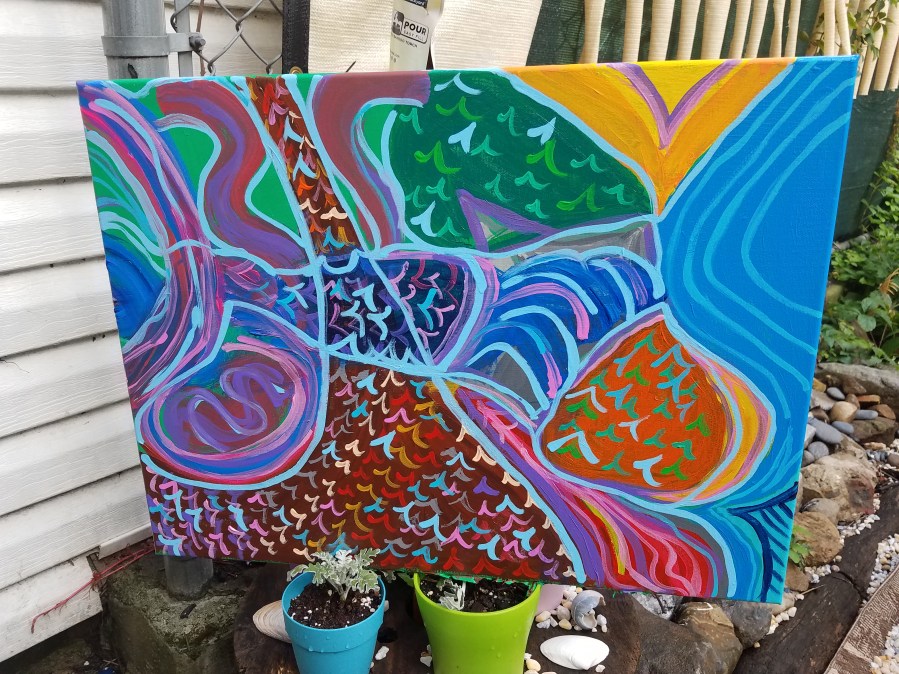
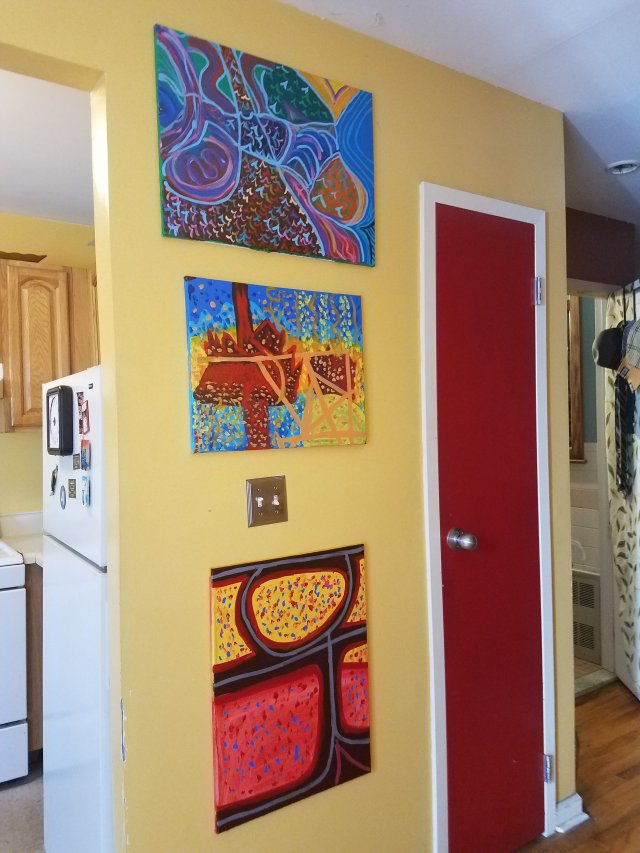
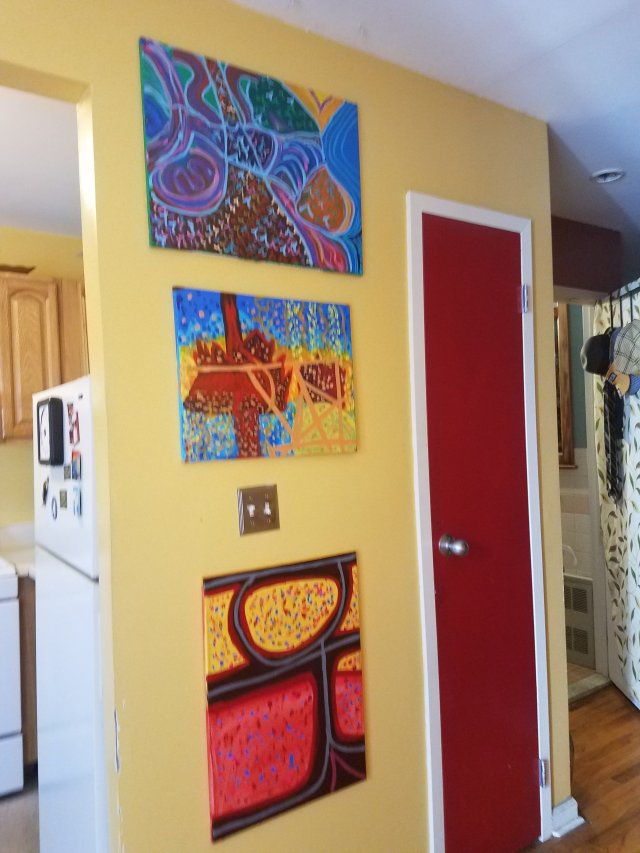


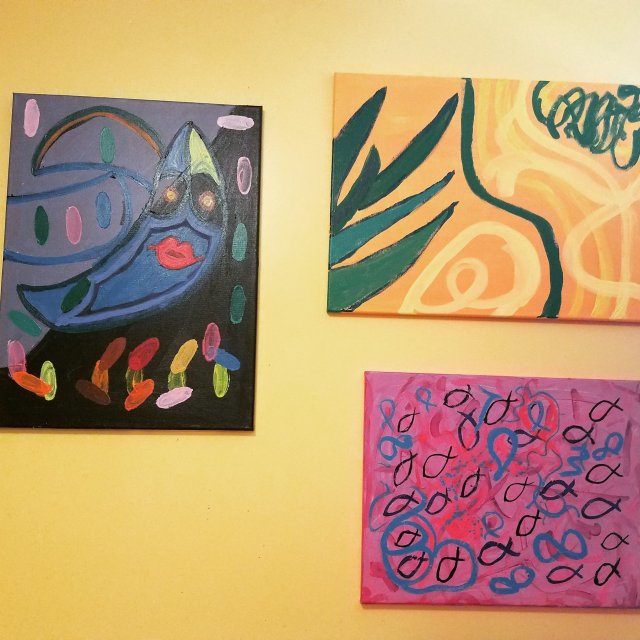


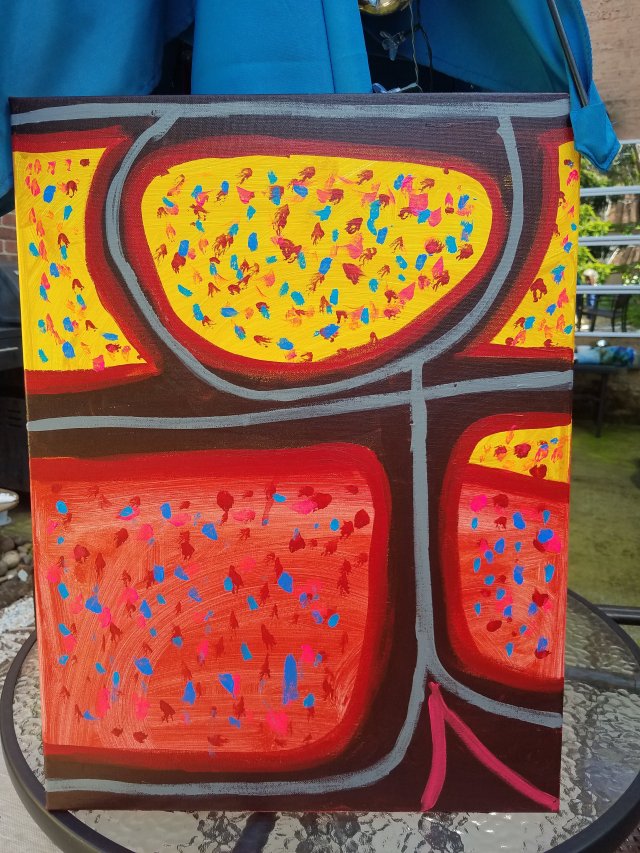
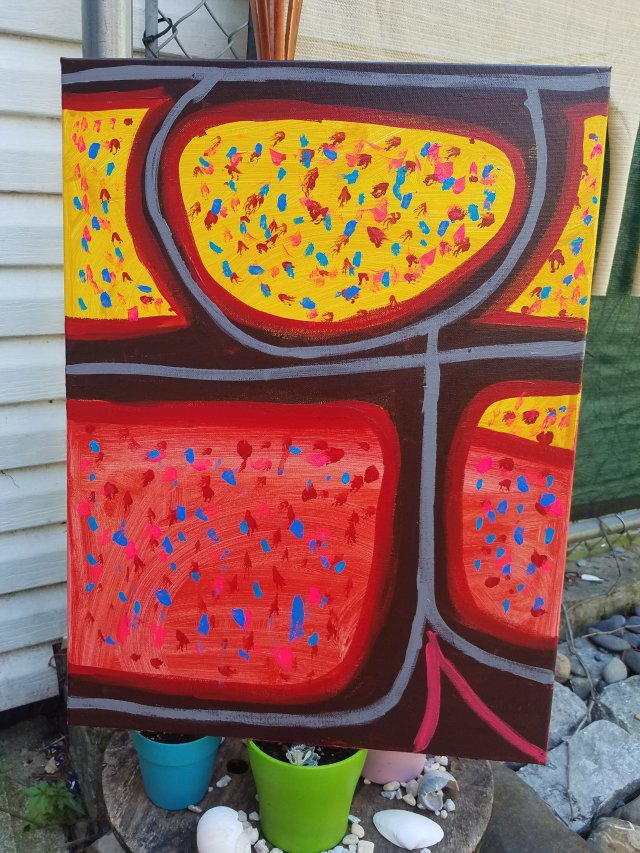
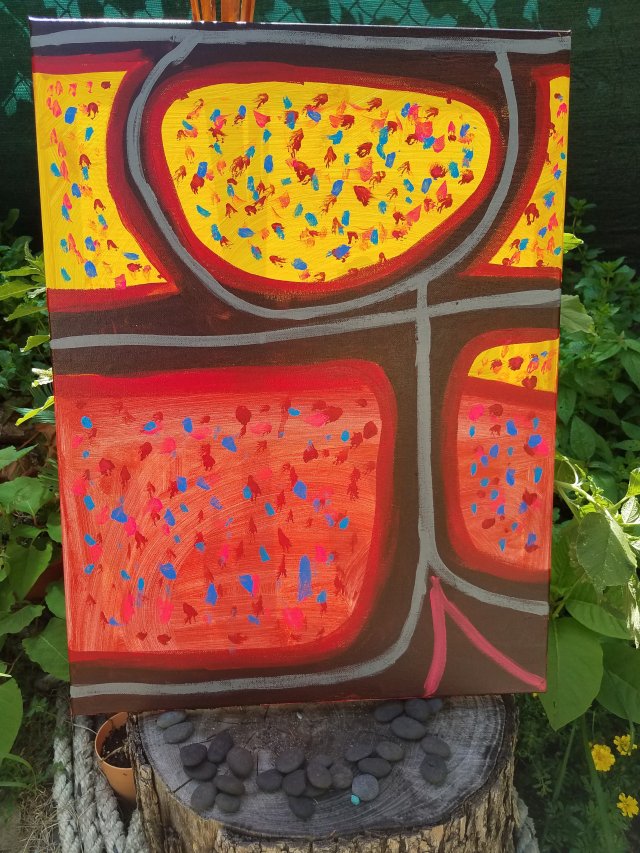






 Espiritu en Fuego/A Fiery Spirit